
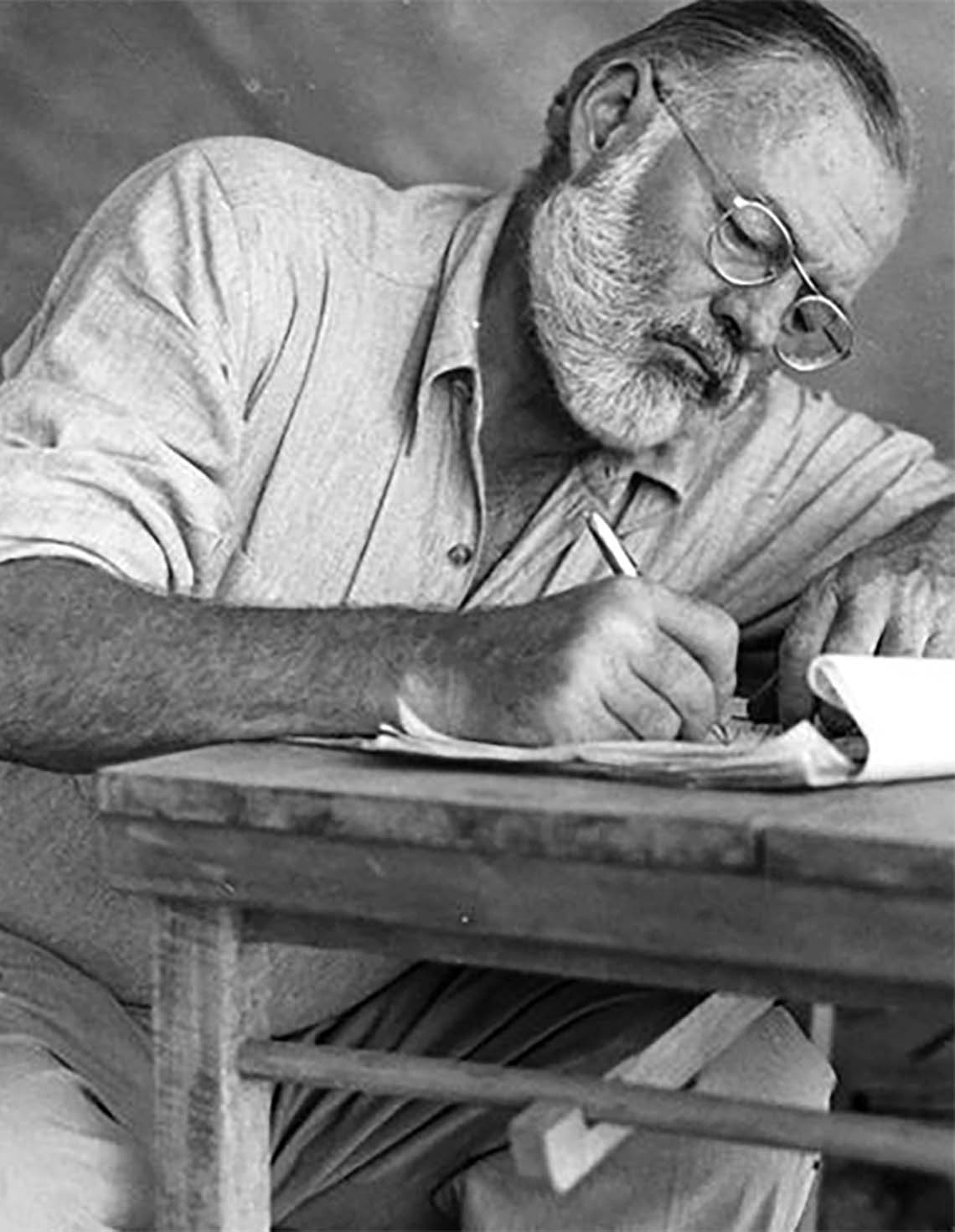
Discover the Legacy of Ernest Hemingway in Key West
When it comes to Key West legends, few names carry more weight than Ernest Hemingway. His time on the island was more than a passing stay. It became a defining part of his life and work. Hemingway found something in Key West that spoke to him. It was honest, raw and full of life. He spent his mornings writing and afternoons on the water or visiting with friends, living a routine that blended discipline with freedom. Some of his most memorable stories were shaped by the people he met here and the rhythms of the island itself. Today, his home on Whitehead Street is a museum, but it still feels like the place where ideas were formed and legends were born. His influence is found not only in his writing but also in the way Key West embraces its history, its creativity, and its connection to one of the greatest storytellers of the 20th century.
The Early Life of Ernest Hemingway
Before becoming one of the most celebrated writers in American history, Ernest Hemingway was shaped by the places and people of his youth. He was born on July 21, 1899, in Oak Park, Illinois, a suburb just outside of Chicago. His father, Clarence Hemingway, was a physician with a love for the outdoors, and his mother, Grace Hall Hemingway, was a talented musician who encouraged creativity in the home.
Hemingway spent many of his summers at the family’s cottage on Walloon Lake in northern Michigan. It was there that he developed a strong connection to nature, as well as a passion for fishing, hunting, and adventure. These early experiences with the outdoors became a recurring theme in his writing, offering vivid backdrops and shaping the rugged characters he would later bring to life.
At Oak Park and River Forest High School, Hemingway was active in sports and also began writing for the school newspaper and yearbook. His early interest in storytelling only grew stronger after graduation when he took a job as a cub reporter for The Kansas City Star. The newspaper’s strict style guide encouraged short sentences and straightforward language, which helped influence the concise, direct writing style Hemingway became known for.
His life took a dramatic turn during World War I when he volunteered as a Red Cross ambulance driver in Italy. He was seriously wounded in the leg by mortar fire, and the experience left a lasting impact on both his worldview and his approach to writing. Even at a young age, the combination of adventure, personal struggle and a desire to capture truth through language began to define what made Ernest Hemingway one of the true Key West legends in the making.
The Literary Career of Ernest Hemingway
The writing style of Ernest Hemingway helped change the way stories were told in the 20th century. His voice was clear, direct and stripped of anything extra. This style came from his early days as a journalist, where he learned to write using short sentences and simple words. Over time, he developed what he called the “iceberg theory,” where the deeper meaning of a story was left just beneath the surface. It’s one of the reasons he became one of the most respected authors of his time and one of the most lasting Key West legends.
Hemingway’s first big success came in 1926 with The Sun Also Rises, a novel about a group of friends searching for meaning after World War I. He followed it with A Farewell to Arms in 1929, a tragic love story set during the war. Later works like For Whom the Bell Tolls and The Old Man and the Sea showed his talent for writing about courage, struggle and the human spirit. The Old Man and the Sea won the Pulitzer Prize in 1953 and became one of his most famous books.
Hemingway also wrote powerful short stories. Many readers still study works like “The Snows of Kilimanjaro,” “Hills Like White Elephants” and “The Short Happy Life of Francis Macomber.” These stories often came from his own experiences and the places he visited. He had a way of writing about everyday people and their quiet battles in life.
In 1954, Ernest Hemingway was awarded the Nobel Prize in Literature. It was a major honor that recognized his impact on modern writing. His time spent traveling, fishing, fighting in wars and talking with locals all made their way into his stories. By the time he moved to Key West, he was already famous. It was during his time on the island, surrounded by friends, the sea and a slower pace of life, that his writing reached a new level. That chapter of his life helped shape his identity as both a literary icon and one of the most unforgettable Key West legends.

Ernest Hemingway’s Life in Key West
When Ernest Hemingway arrived in Key West in the early 1930s, he quickly realized he had found something special. The island’s easy pace, strong community, and access to the sea gave him exactly what he was looking for. He once said it was the greatest place in the world, any time, any day. Key West gave him the space to focus on his writing and the freedom to live life on his own terms.
Hemingway and his second wife, Pauline, purchased a Spanish Colonial home on Whitehead Street not far from the Southernmost Point. Each morning, he would write in a small studio behind the main house, often starting before sunrise and working for hours. That daily routine led to some of his best-known work.
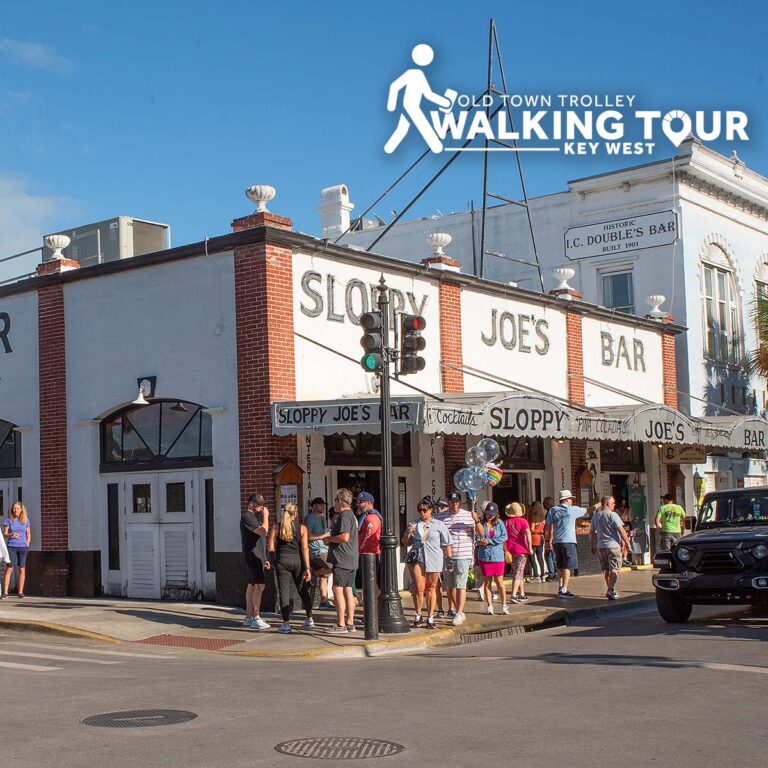
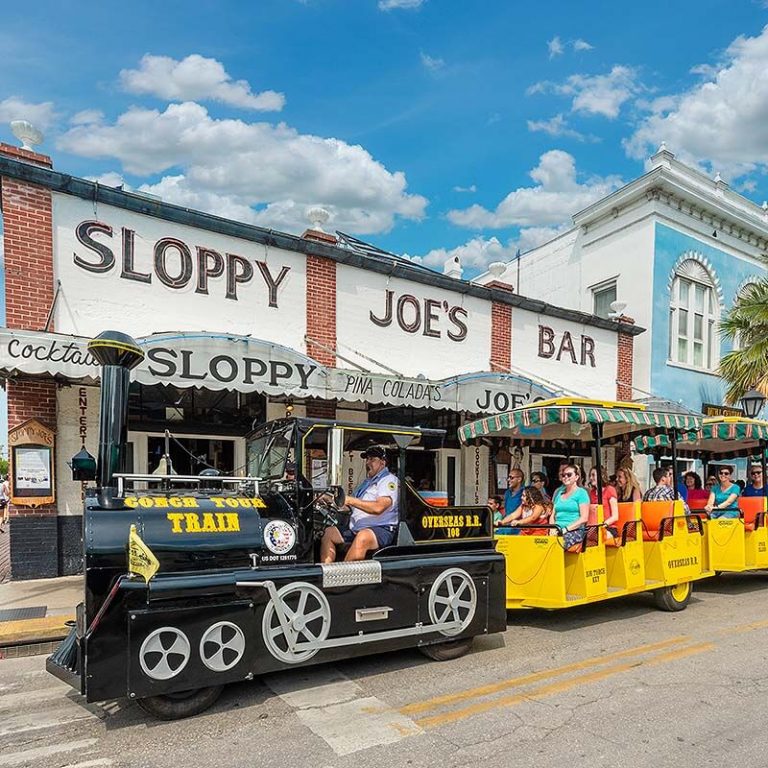
In the afternoons, he would meet friends at Sloppy Joe’s Bar, spending time with locals and soaking in the character of the island. He became especially close with the bar’s original owner, Joe Russell. Together, they went on fishing trips, swapped stories, and formed a bond that would become part of island lore.
This tight-knit group, often called the Key West Mob, included a handful of colorful locals who shared a love for the ocean, storytelling and strong drinks. Their adventures stretched from the Florida Keys to Cuba and the Dry Tortugas. Many of the people in this circle became inspiration for Hemingway’s characters, and their stories found their way into his books. One of his novels, To Have and Have Not, is set in Key West during the Depression and draws heavily from the world he lived in every day.
Today, that legacy lives on throughout the island. At Capt Tony’s Saloon, which stands in the original location of Sloppy Joe’s, you can still see the bar stool Hemingway once claimed as his own. His home, now known as the Hemingway House, welcomes thousands of visitors each year. Guests can explore the rooms where he lived, view original furnishings and visit the famous backyard pool built by Pauline. There’s even a penny cemented near the pool’s edge, placed there by Hemingway as a playful gesture after joking about how expensive the pool had been to build.
The house is also home to dozens of six-toed cats, descended from the author’s original feline companions. Every detail, from the furniture to the tropical gardens, helps tell the story of Ernest Hemingway and his deep connection to the island he loved. For many visitors, walking through that home is a chance to step into the world of one of the great Key West legends.
The Legacy of Ernest Hemingway in Key West
The impact of Ernest Hemingway is still felt throughout Key West. His time on the island helped shape its identity and gave it a lasting connection to one of America’s most famous writers. His work, his routines and his larger-than-life personality became part of the local story. Today, he remains one of the most celebrated Key West legends, with his presence seen and felt in places all across the island.
The Hemingway House is one of Key West’s most visited landmarks. Visitors can explore the home where he lived and worked, walk through the gardens and see the rooms where he spent quiet mornings writing. The house is filled with personal items, photographs, and stories that offer a glimpse into the everyday life of a man who helped define modern American literature.

Sloppy Joe’s Bar continues to draw visitors from around the world. While the current location isn’t the original, it still holds strong ties to Hemingway’s time on the island. Just around the corner, at Capt Tony’s Saloon, guests can sit at the bar where Hemingway once shared drinks and stories with friends. These places remain important because they help keep his story alive and show why he is still considered one of the true Key West legends.
Every summer, the island hosts Hemingway Days, a weeklong festival that celebrates his life and writing. Events include a fishing tournament, literary readings and the famous look-alike contest, where men with white beards and big personalities compete to carry on the Hemingway name. It’s a celebration that brings people together and reminds everyone how much he meant to this place.
The legacy of Ernest Hemingway is more than just books and awards. It lives in the streets he walked, the places he loved and the stories that still connect visitors to the island. His time in Key West left a lasting impression, and that connection continues to make him one of the most memorable and meaningful Key West legends.
Conclusion
The story of Ernest Hemingway in Key West is more than a chapter in his life. It’s a part of the island’s identity. From the walls of his home to the voices of storytellers who still gather in the places he loved, his presence is alive in every corner of town. Visitors continue to walk the streets he knew well, drawn by the same spirit of freedom and creativity that brought him here in the first place. His words, his work and his love for the sea all live on, making him one of the most enduring Key West legends. For those who come to explore the island through his eyes, the story is far from over.
Mel Fisher
Mel Fisher spent every day for nearly 17 years searching the ocean floor just offshore of Key West for the 1622 sunken Spanish galleon, Nuestra Senora de Atocha. Though faced with much adversity and many obstacles, and the tragic loss of one of his own children, Mel never gave up. And on July 20, 1985, his lifelong dream was realized as he sat in his Key West office listening to his son on the radio calling out “put away the charts, we found the mother lode.” That day was “the day” that Mel always talked about—as his mantra was “today’s the day”. For his family, his crew, the Key West community and the world, it was an astounding event, the recovery of over $450 million worth of sunken treasure. Pieces of eight, 40 tons of gold and silver, Columbian emeralds, gold coins, silver and gold artifacts and over 1000 silver bars were found. This remains the largest treasure discovery in Key West History.
In Key West, Mel was well-known for his vast background and knowledge of scuba diving and for his unwavering determination to successfully recover the sunken treasure. He loved Key West and the people he’d come to know over the years and was thrilled to share his find with the community and the world. The Mel Fisher Maritime Museum displays many of the priceless pieces that were recovered from the Atocha.
Mel Fisher lived out the rest of his life in Key West, passing away in his home in December of 1998 at the age of 76.
Jimmy Buffett
It’s no surprise that when people think of Jimmy Buffett, images of Key West often come to mind. Perhaps it’s the laid-back lyrics and melodies that Buffett is famous for or the fact that he got his first real taste of fame right here. After living in Nashville and New Orleans and having very little success in the music business, Jimmy came to Key West with a friend in the early 1970s. His first performance in town was in the Chart Room at the Pier House and was the beginning of what became a thriving career that would span decades (and is still going strong).
During that time, Key West offered Jimmy what the other cities couldn’t… freedom to express himself and a host of interesting characters and places to sing about. The island paradise is said to be the place that had the most influence on his musical career. We’ve all heard the songs Margaritaville, Cheeseburger in Paradise and Come Monday and most of us know enough words to sing along. Songs like these and other Jimmy Buffett favorites not only entertain people, but they also tell a story about his life and the many places he’s been to, Key West among them. Jimmy Buffett brought the Margaritaville Café on Duval Street to Key West so visitors could experience their own “changes in latitude” while sipping a frosty frozen concoction, indulging in delicious fare and enjoying performances by local musicians.
Jimmy has traveled the world over, has had albums go gold, and performed for thousands upon thousands around the globe, yet still holds a special place in his life for Key West—and maintains a home here as well.

Harry S. Truman
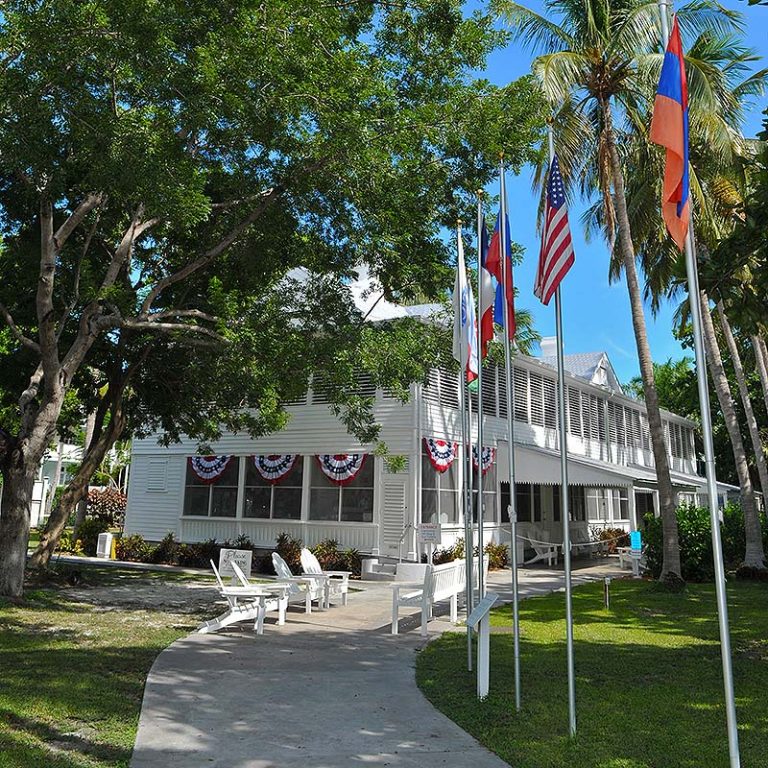
When Harry Truman came to Key West in search of a place to recuperate and relax, he discovered something better. The island paradise could offer not only an ideal winter home, but it also had perfect climate, friendly locals and excellent fishing. Life here was relaxed and unhurried, tranquil and serene. Once he settled in, Truman hardly wanted to leave and it’s because of his affection for Key West that he spent 175 days of the year here. Living in the Little White House, Truman enjoyed his life, managed the country and entertained prestigious visitors. The home became a working Presidential Office where important meetings were held; the Department of Defense was actually conceived in one of the rooms.
Over the years, John F. Kennedy, Dwight D. Eisenhower and other powerful United States leaders visited the Little White House and were said to be equally entranced by its alluring spirit. Today, everyone can get a glimpse into Truman’s life in Key West by touring the Little White House. Personal items that belonged to Harry, Bess and Margaret still remain, as do furnishings and other artifacts. Knowledgeable tour guides bring the history of the home to life and provide a wonderful look at our 33rd President and his deep affection for Key West and the Little White House.

Henry Flagler
Throughout the state of Florida, Henry Flagler is known as an oil entrepreneur, hotelier and railroad magnate. His pioneering vision and development of opulent hotels helped create the grand reputation of Palm Beach as an elite oasis for the wealthy and powerful. When Flagler came to Florida in the late 1880s, he realized the area’s potential for tourism and trade—and knew just what was needed to make it successful. Soon after, he founded Florida’s East Coast Railway and with that, amazing developments began to occur. The railway was extended to reach Miami and Biscayne Bay and Flagler did not want to stop there. He soon began planning an over-seas railway that would extend 128 miles out to sea to connect Key West with the rest of the state.
What others thought was impossible, Flagler knew was attainable. After 7 years of arduous labor, and major obstacles including hurricanes and mosquito infestations, the Flagler Over-Seas Railway was completed and on January 22, 1912, Henry Flagler arrived triumphantly on the first train into Key West.
The Sails to Rails Museum serves as an everlasting tribute to his tenacity and ingenuity. While touring the museum, visitors can go inside an actual railroad car, view memorabilia from the Flagler era and see a variety of photographs and artifacts about the railroad industry.
Sails to Rails is temporarily closed as we prepare to journey to an exciting new location.
Tennessee Williams
Tennessee Williams won great critical acclaim as a playwright and was perhaps best known for his two Pulitzer Prize-winning plays, Cat on a Hot Tin Roof and A Streetcar Named Desire. He moved to Key West in the 1940s and is said to have written the first draft of A Streetcar Named Desire while staying at the La Concha Hotel. Although he lived in many places throughout the United States, the only home he ever owned was at 1431 Duncan Street in Key West. It was there that Williams lived until he passed away in 1983.
Tennessee Williams created many other award-winning plays and short stories that inspired, entertained and intrigued the world. His play The Rose Tattoo was made into an Academy-Award-winning movie that was filmed in Key West in 1956.
Today his creative spirit lives on at the Tennessee Williams Theatre on College Road. The theatre brings live shows and performances from talented professionals that hail from New York and around the world. From opera to pops and orchestra to Broadway comedies and dramas performed by Tony Award-winning actors, the Tennessee Williams Theatre offers a host of exciting events and productions year-round.
Save up
to 5%
Conch Tour Train Tickets
to 5%
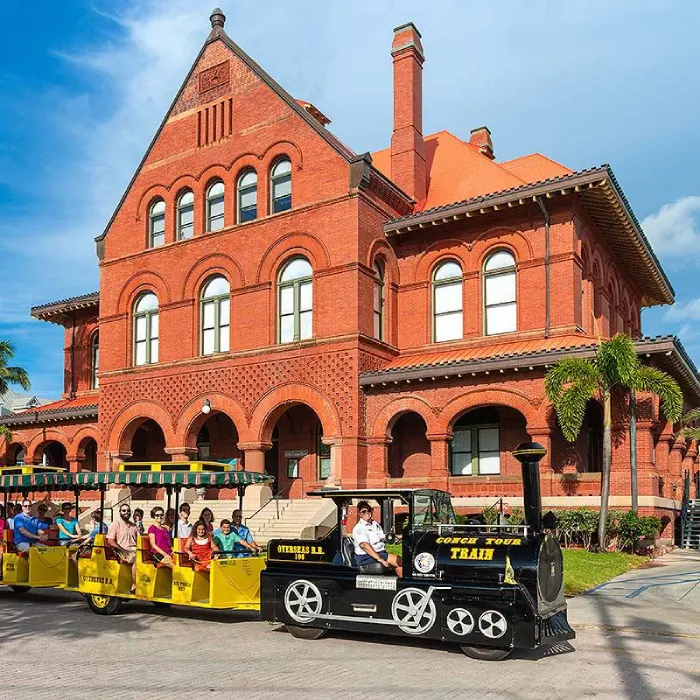
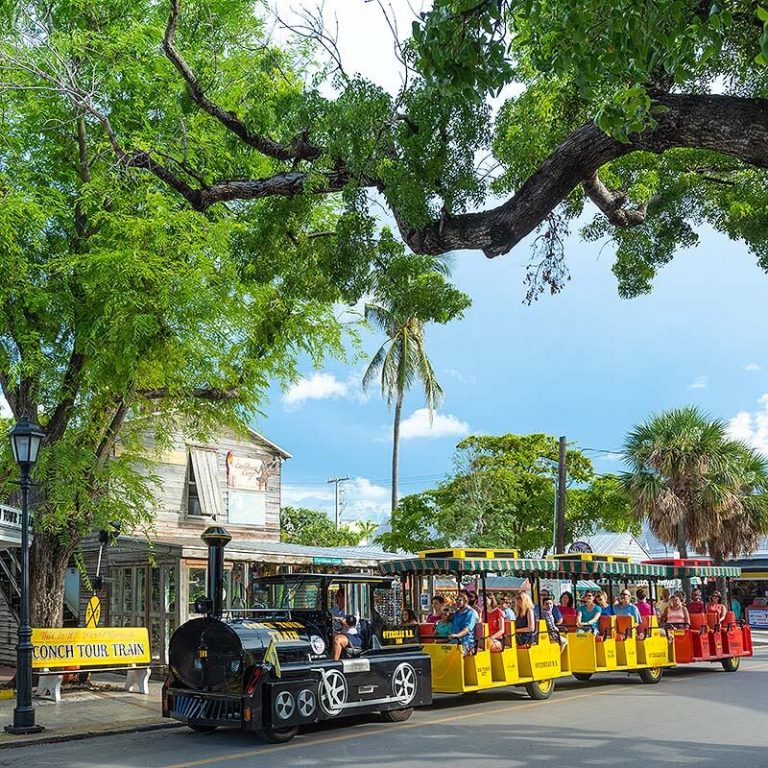
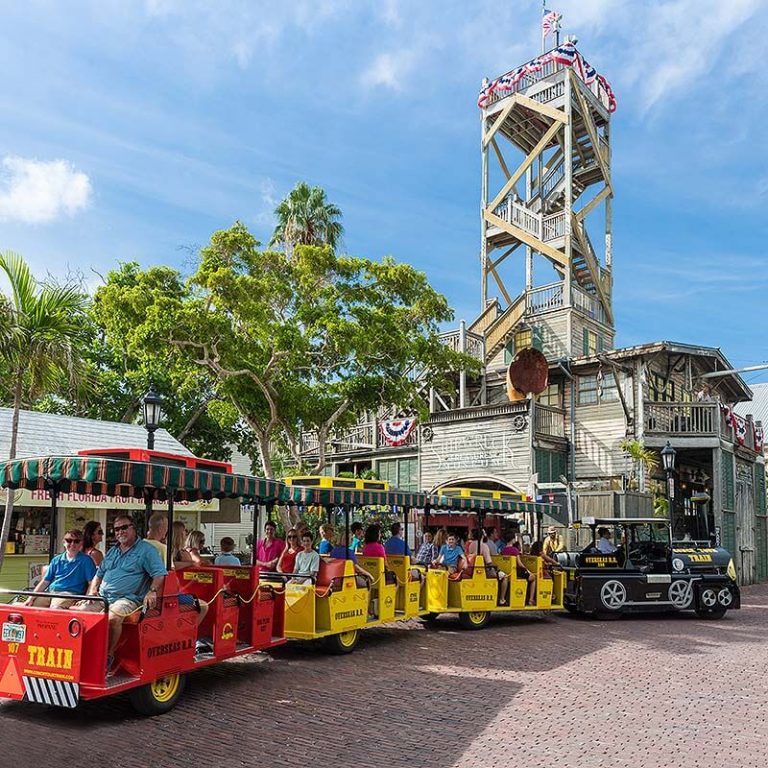
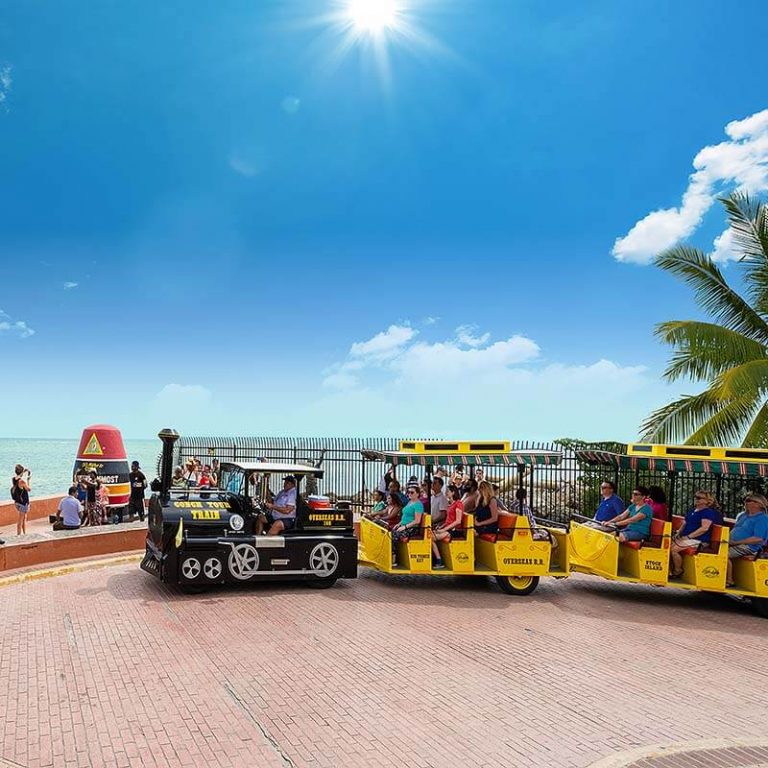
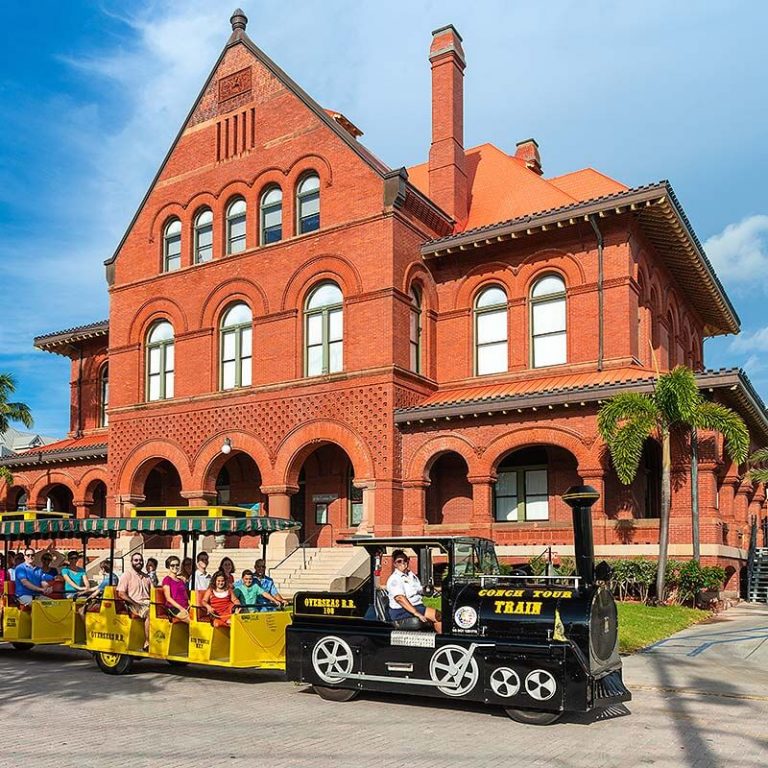
Since 1958, the Conch Tour Train has treated guests to a close-up view of the Southernmost City’s most popular places including Mallory Square, The Harry S. Truman Little White House, Overseas Railroad Museum, the Key West Aquarium and more. While on the tour, your engineer offers an interesting and amusing narrative filled with historical facts, trivia and humor, and recounts fascinating stories of the colorful people that make Key West so unique.
- 60-minute tour of the Conch Republic
- One full loop through Old Town Key West
- Open-air sightseeing perfect for taking pictures
- FREE Two Guided Walking Tours included
- FREE coupons filled with valuable discounts to use all over the island
- FREE Full color map
Save up
to 9%
to 9%
TOUR KEY WEST AND TWO MUSEUMS
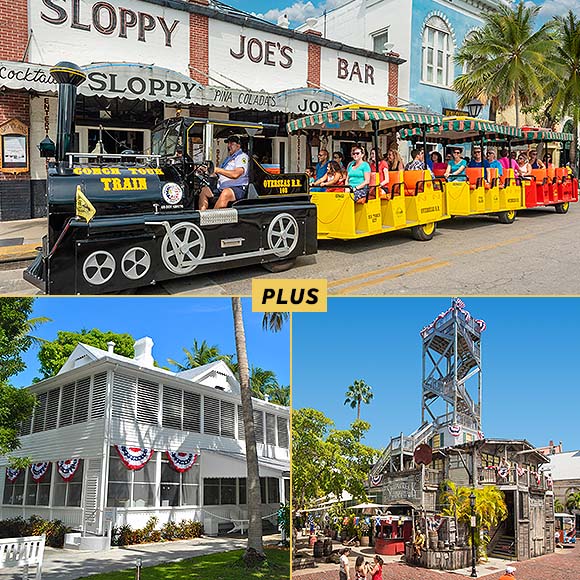
Since 1958, the Conch Tour Train has treated guests to a close-up view of the Southernmost City’s most popular places. While on the tour, your engineer offers an interesting and amusing narrative filled with historical facts, trivia and humor, and recounts fascinating stories of the colorful people that make Key West so unique.
Visit Florida’s only presidential museum at the Harry S. Truman Little White House built on the waterfront of the harbor of Key West.
Journey back to the mid-19th century in the Key West Shipwreck Treasure Museum. Highlights include displays and video presentations on the history of wreck salvage in the Florida Keys and the sinking of the legendary Isaac Allerton.
- Conch Tour Train:
- 60-minute tour of the Conch Republic
- One full loop through Old Town Key West
- FREE Two Guided Walking Tours included
- FREE coupons filled with valuable discounts to use all over the island
- Harry S. Truman Little White House:
- See the home Harry S. Truman came to relax and rest
- Visit where Eisenhower recuperated from his heart attack in 1956
- Thomas Edison resided here during World War I
- Key West Shipwreck Treasure Museum:
- Discover the world of Shipwrecking
- Hear the story of the Isaac Allerton which wrecked off Key West
- Climb a 65' Captain's Observatory
- Attraction tickets do not have to be used on the same day
Save up
to 5%
to 5%
TOUR KEY WEST AND TWO TOP ATTRACTIONS
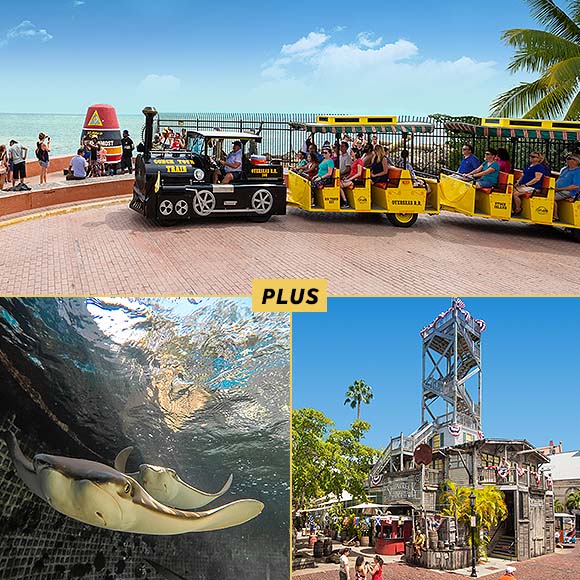
Since 1958, the Conch Tour Train has treated guests to a close-up view of the Southernmost City’s most popular places. While on the tour, your engineer offers an interesting and amusing narrative filled with historical facts, trivia and humor, and recounts fascinating stories of the colorful people that make Key West so unique.
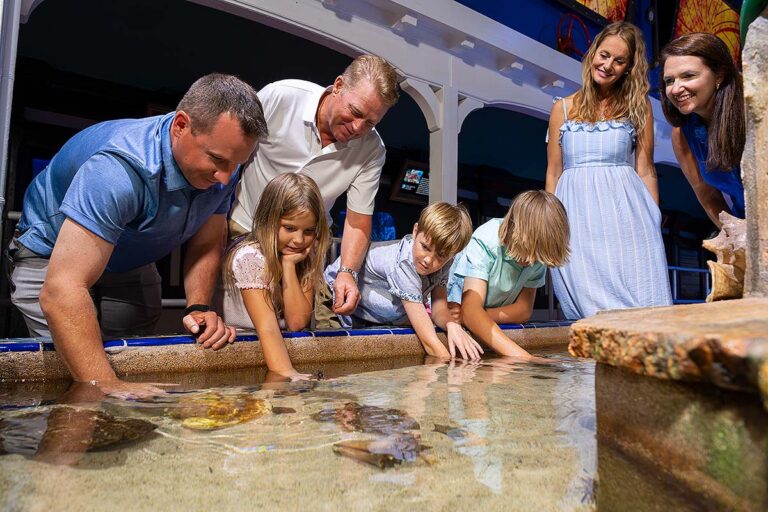
Discover the undersea world at the Key West Aquarium. A Window of Wonder comes alive as expert guides explain the mysteries of the water surrounding the Florida Keys.
Journey back to the mid-19th century in the Key West Shipwreck Treasure Museum. Highlights include displays and video presentations on the history of wreck salvage in the Florida Keys and the sinking of the legendary Isaac Allerton.
- Conch Tour Train:
- 60-minute tour of the Conch Republic
- One full loop through Old Town Key West
- FREE Two Guided Walking Tours included
- FREE coupons filled with valuable discounts to use all over the island
- Key West Aquarium:
- Daily turtle feedings
- Touch Tank offers guests hands on experience
- A wide variety of fish including grouper, moray eels, barracuda, tropical fish and more
- Key West Shipwreck Treasure Museum:
- Discover the world of Shipwrecking
- Hear the story of the Isaac Allerton which wrecked off Key West
- Climb a 65' Captain's Observatory
- Attraction tickets do not have to be used on the same day
Prev
Next